
Tucker Public Records Inventory
No single office keeps all Tucker public records. City Hall holds municipal material created since city operations began in 2016. DeKalb County offices in Decatur remain the core custodians for land, taxation, court, probate, elections, policing, and older local files. State databases add licenses, corporations, custody records, and vital-record services. This coverage table shows the first practical channel and the main limit for each system.
| Record set | Keeper | Web coverage | Access route |
|---|---|---|---|
| City agendas, contracts, permits, code files | Tucker City Clerk or division | Post-2016 city era; selected portals | Portal, inspection, or city request |
| Deeds, liens, plats, county UCC | DeKalb Superior Court Clerk | Landmark 1979-current; alpha books 1961-1977 | Index, clerk counter, mail copy |
| Property ownership and assessment | DeKalb Property Appraisal | Current and historical assessments | Free portal; dataset request |
| Court cases and divorces | Municipal, State, or Superior Court clerk | Dockets vary by court and case | Portal, terminal, archive, clerk copy |
| Birth, death, marriage, divorce confirmation | Georgia DPH, DeKalb offices, courts | No open certificate name search | Eligibility, ID, application, or court request |
| Businesses and professional licenses | Georgia Secretary of State and boards | Current entity and license searches | Free lookup; order filed copies |
Open access has boundaries. Sealed and record-restricted cases, juvenile files, adoption records, protected vital certificates, and confidential voter fields do not appear like ordinary records. Driver data is governed by the federal Driver’s Privacy Protection Act. When a file mixes public and protected facts, request the segregable public portion with confidential fields redacted rather than treating the whole file as closed.
Tucker and DeKalb Records Custodians
A Tucker mailing address does not prove that the City of Tucker created the file. Tucker incorporated in 2016, and later annexations changed city boundaries. Pre-2016 municipal series do not exist as Tucker city records. Historic permits, court matters, and local government files usually belong with DeKalb County or another agency that served the area at the time.
Start with jurisdiction and date. City Clerk records include agendas, minutes, ordinances, contracts, occupational-tax material, and city departmental files. DeKalb keeps deeds, property rolls, county court files, probate matters, and police records. State offices control corporation and license searches. A postal label alone is not enough.
Note: Decatur is the county seat, so many Tucker records require a portal or office based outside Tucker.
Tucker Open Records Portal
The Tucker open-records instructions lead to the hosted request system. Describe an existing document, department, date range, person, address, case, or permit. Georgia law does not force the city to create a new compilation or answer research questions. The portal accepts contact details, a description, optional attachments, and a delivery choice when available.
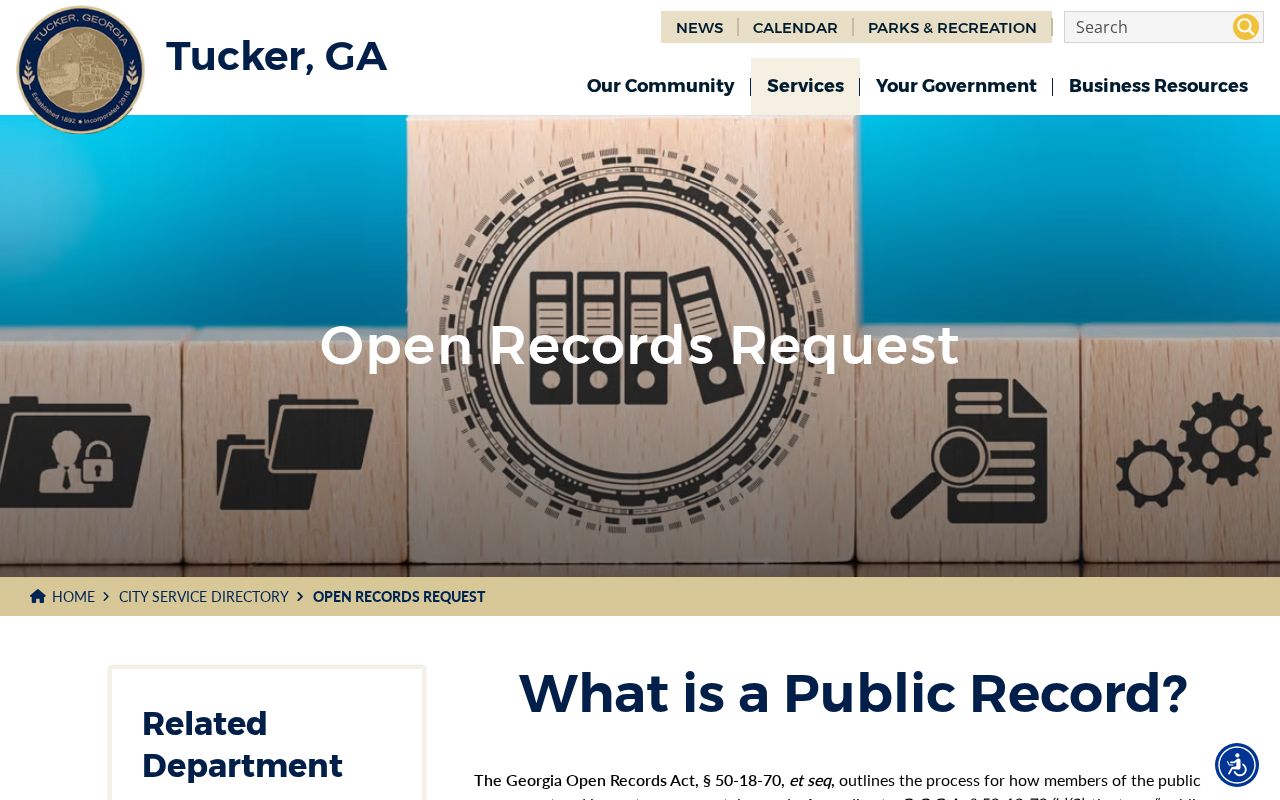
The captured screen shows the official entry point and Create Request control. Closed Tucker Municipal Court disposition documents also use this route. Code complaints carry a local privacy quirk: reporter details sent by email can themselves become open-record material, while the complaint form offers an anonymous option.
DeKalb Deed Index Access
The DeKalb Superior Court Clerk’s Real Estate Division records deeds, security deeds, liens, plats, and county real-estate UCC filings. Landmark’s main electronic index covers 1979 forward. Its separate historical alpha books span April 1, 1961 through 1977. No official online coverage was confirmed for earlier deeds, so ask the clerk or Georgia Archives rather than assuming a no-hit means no record.
The DeKalb Historical Alpha Index displays scanned grantor and grantee books. A grantor transfers an interest; a grantee receives it.
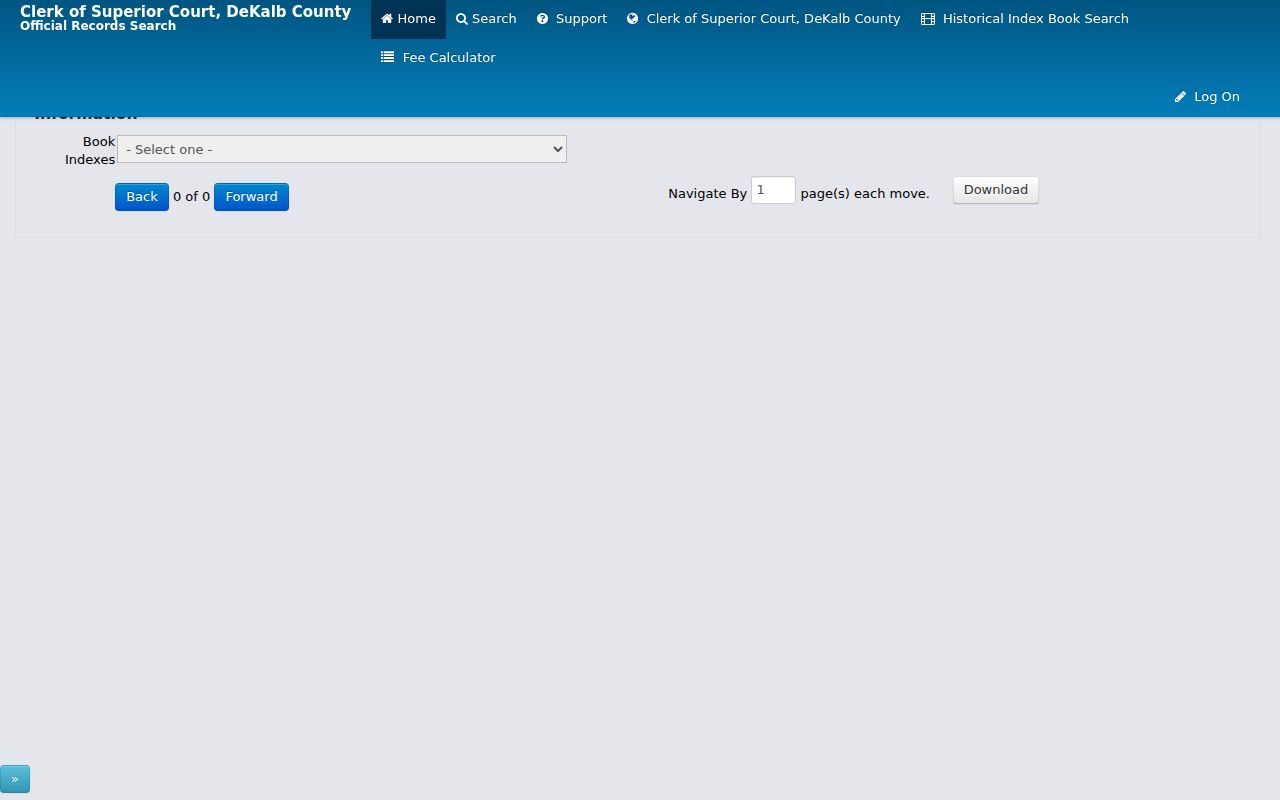
The image reflects year and alphabet-book browsing rather than a modern full-text search. Try spelling variants and both party roles.
| Search mode | Input | Best use |
|---|---|---|
| Name | Grantor or grantee | Find instruments tied to a person |
| Document | Instrument type and date | Narrow deeds, liens, or plats |
| Book and page | Recorded reference | Retrieve a known instrument |
| Parcel ID | County parcel key | Bridge appraisal data to deeds |
Tucker GIS Is Not a Deed
DeKalb GIS can translate an address or parcel ID into the latest deed or plat book and page. It does not issue the recorded image, perform a survey, or settle an encroachment. Send the known book and page to the Real Estate Division for the actual instrument. This split between map help and official-image custody is easy to miss.
The DeKalb Mapping and Land Records page explains the GIS channel.
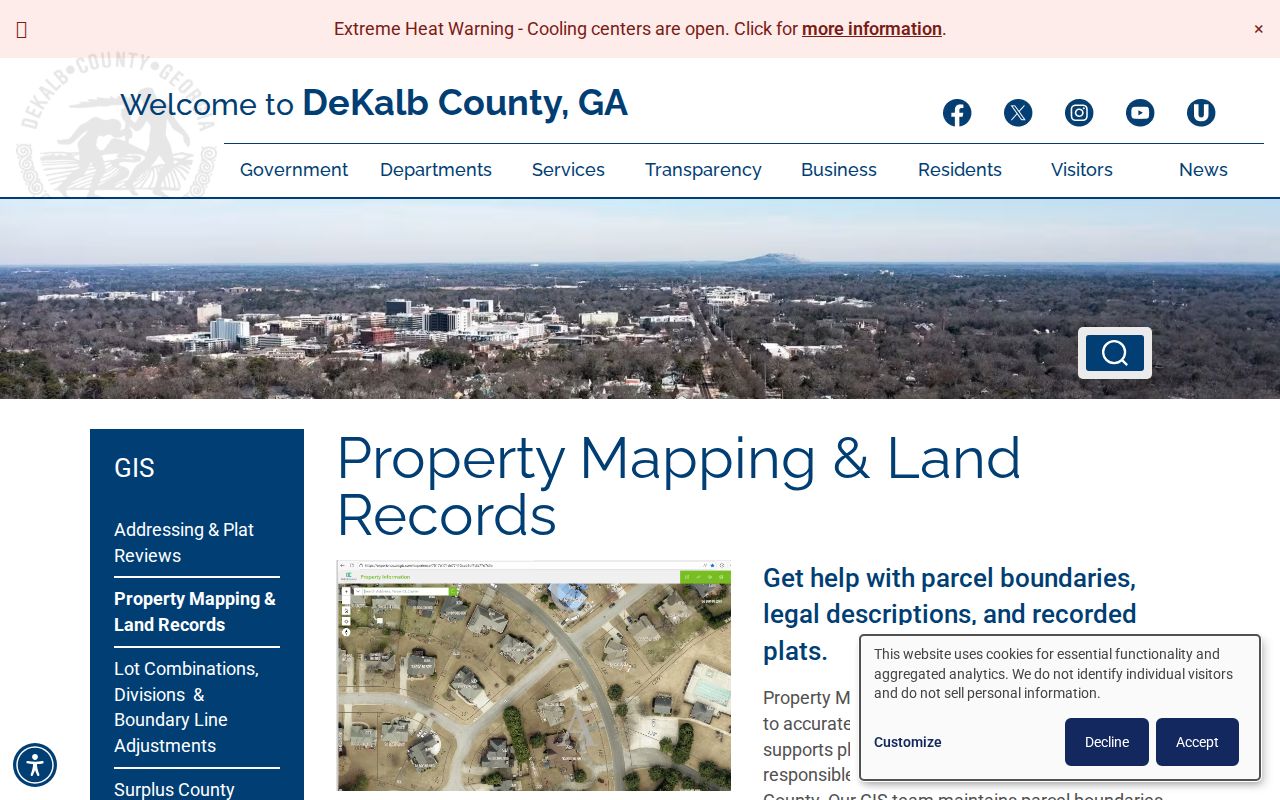
The screen is a starting point for parcel and ownership context, not a substitute for the clerk’s recorded deed. A parcel is the county’s database unit for a piece of land.
- Index
- A finding aid that points to a record.
- Recorded image
- The scanned instrument filed with the clerk.
- Certified copy
- A copy the custodian formally attests is true.
- Custodian
- The office responsible for keeping and releasing the record.
Tucker Court Record Boundaries
Tucker Municipal Court hears city-limit traffic, misdemeanor, and ordinance matters. Jury demands transfer to DeKalb State Court. DeKalb Superior Court handles felony, broad civil, family, and divorce files; Probate Court keeps estate and marriage-license matters. Search participating courts through re:SearchGA, then request the exact filing from the clerk if no image appears.
Typical searches accept a person or business name, case number, court, case type, and filed-date range. A docket is the court’s event list, not necessarily the full file. Public DeKalb terminals are available on weekdays, and records before 2010 route to Archives. Restricted, sealed, juvenile, and adoption matters will not display like public dockets.
Georgia Vital Record Splits
Georgia DPH holds all state birth and death certificates, marriage records from 1952 through 1996, and divorce confirmations. DeKalb Probate Court handles Tucker-area marriage licenses outside that span. DeKalb Superior Court supplies the actual divorce decree. A confirmation is not the decree, and a historical index is not a certified certificate.
Birth and death copies require an eligible requester, identification, an application, and payment under O.C.G.A. §§ 31-10-25 and 31-10-26. DPH accepts online, mail, and walk-in orders; its published timing is two to four weeks online, up to five business days for expedited service, eight to ten weeks by mail, and same-day walk-in service when available. Records before 1919 route to the county or Georgia Archives.
Adoption records are sealed under O.C.G.A. § 19-8-23. Official sources do not state a simple age when every certificate becomes public. Older library and archive indexes remain useful, but they do not remove certified-copy eligibility rules.
Choose the product first. Ask whether the task needs an index entry, a verification letter, a plain court copy, or a certified certificate before paying.
Tucker State Record Lookups
Several Georgia systems expose public roles without a city request. The professional license verification search accepts fields such as profession, license number, name, business name, location, and status.
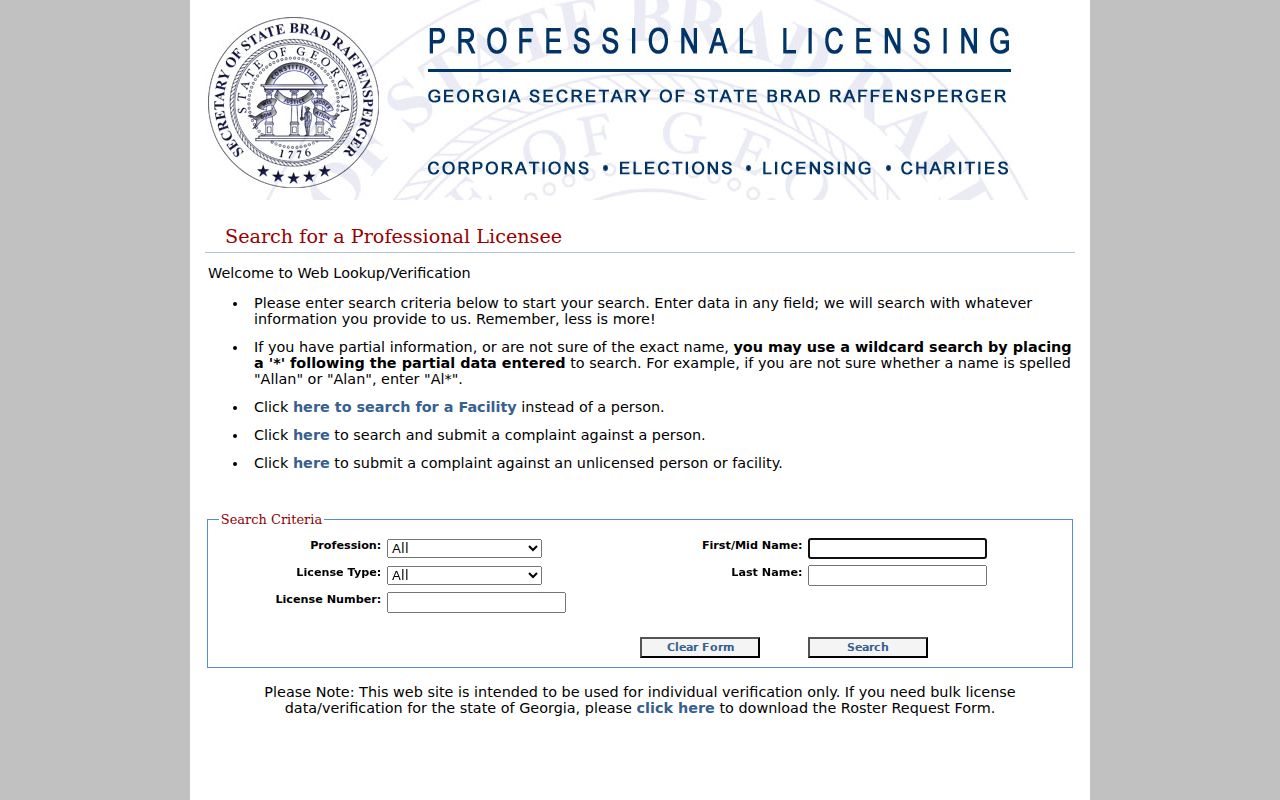
The result can establish the board, license number, status, issue or expiration dates, and public orders where available. Separate boards cover some professions, so one no-hit is not conclusive.
The Georgia corporation search can query a business name, control number, registered agent, officer, or designated agent.
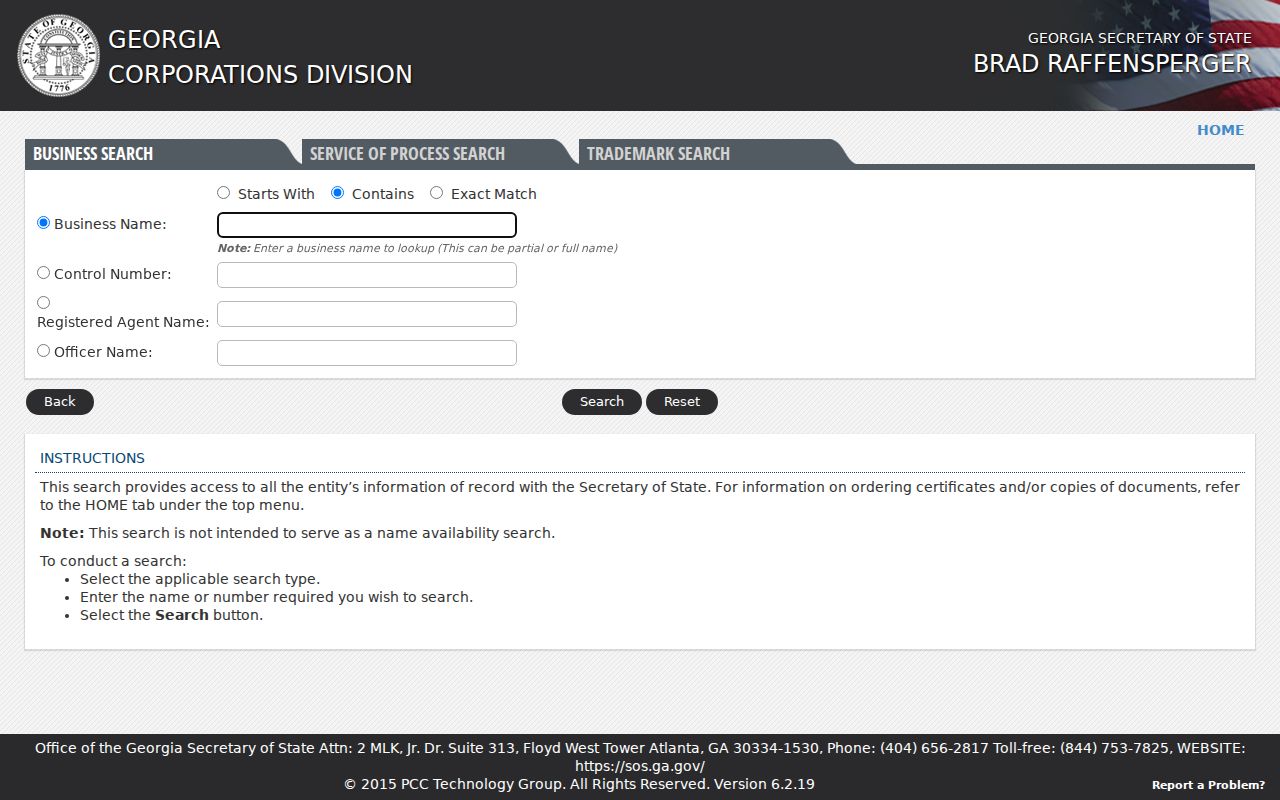
The interface connects people to entities and filed office addresses. It is a public filing search, not proof that a name is available for a new company.
Tucker Custody and Registry Records
DeKalb’s booking search covers county custody, while Georgia Department of Corrections records cover state custody. GDC suggests trying the first four surname letters and including all offenders when an exact active-only query fails. A jail booking is not a court disposition, so confirm the outcome with the court that handled the case.
The Georgia Bureau of Investigation registry offers name and location searches under O.C.G.A. § 42-1-12.
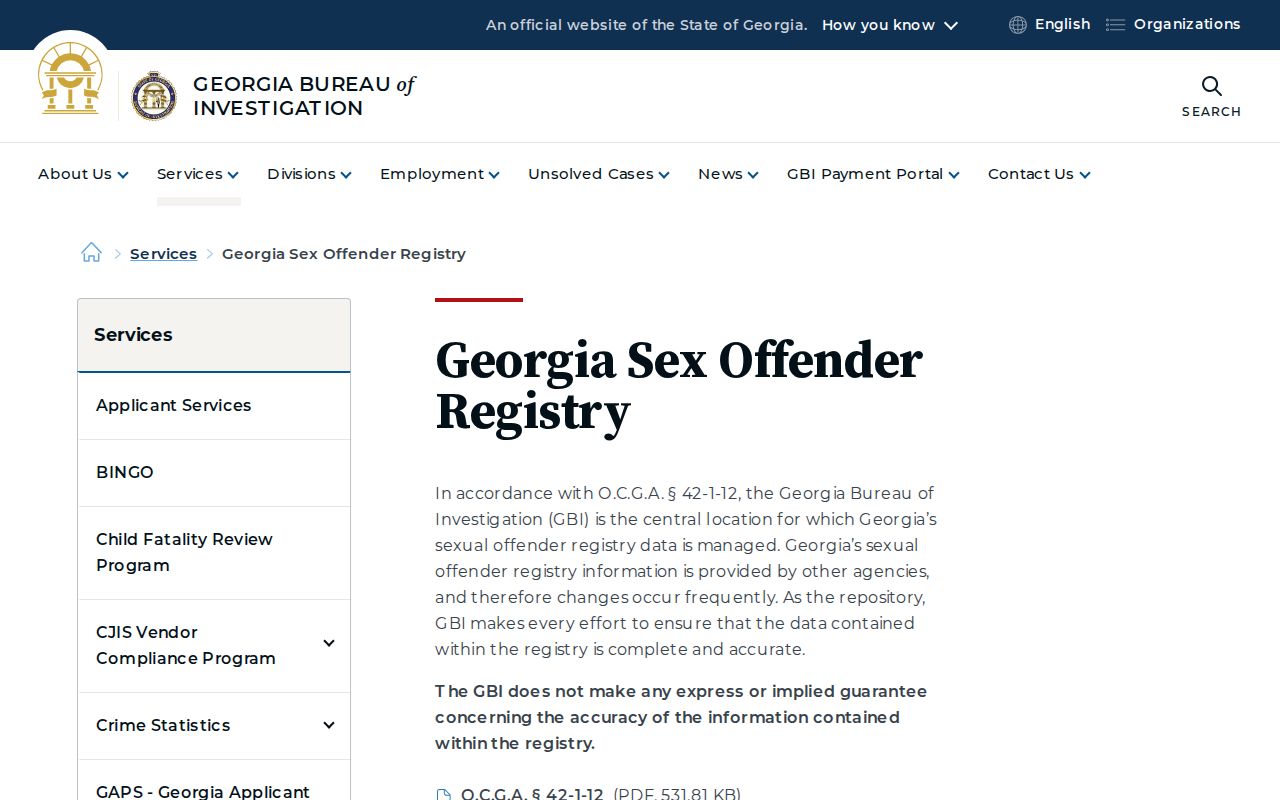
The captured controls provide a current official channel, but agency-supplied data can change. Verify identity and status with the custodial agency instead of treating a similar name as a match.
Tucker Records Offices and Channels
Online access is only one channel. Tucker accepts city requests online and by contact with the clerk. DeKalb Real Estate provides a counter and mailed copy route, while court clerks offer terminals, archives, plain copies, and certification. Use the office that created the file.
Tucker City Clerk
1975 Lakeside Parkway, Suite 350A
Tucker, GA 30084
678-597-9040
DeKalb Real Estate Division
556 North McDonough Street, Ground Floor
Decatur, GA 30030
404-371-2836
Tucker Municipal Court
1975 Lakeside Parkway, Suite 350B
Tucker, GA 30084
678-597-9040
The City Clerk is also available by phone when the web form is not practical. For a mailed deed copy, give the Real Estate Division an instrument number or book and page and use its courthouse mailing address. Court files may require a public terminal, an archive request for older material, or a clerk-issued plain or certified copy.
Tucker Record Fees Compared
Different charges serve different purposes. Under general Open Records Act guidance, the first 15 minutes of search, retrieval, or redaction labor are free, and the lowest-paid qualified employee should do the work. A large request may receive a timetable and estimate. Tucker can charge for production, while DeKalb general requests quote ten cents per letter or legal page.
Clerk fees follow a separate schedule. DeKalb Real Estate lists regular copies at $1 per page, certified copies at $2.50 for the first page plus 50 cents for each added page, and plats at $2 per page. Ask for electronic inspection first. Certification adds value only when an official attested copy is required.
Note: A filing fee, copy fee, certification charge, portal image charge, and records-request labor estimate are not interchangeable.
Private Fields in Public Records
O.C.G.A. § 50-18-72 protects categories such as Social Security numbers, medical and financial data, a mother’s birth name, month and day of birth, and some home contact details of protected public personnel. Georgia Safe at Home provides eligible survivors a substitute address. Never republish a participant’s confidential actual address.
Lawful access is not permission to stalk, threaten, harass, or commit identity theft. Use official records for family history, estate work, civic review, scam checks, and other lawful personal purposes. If an old image exposes a sensitive identifier, do not repeat it.
Request Tucker Public Records
The Georgia Open Records Act, O.C.G.A. § 50-18-70 et seq., does not require a special phrase or form. A written request creates the clearest record of scope and timing. Within three business days, the custodian must produce readily available records or provide a written production schedule, projected cost, and legal basis for any withholding. That response window is not a promise that a large production will be complete in three days.
- Identify the office that created the record. Use the city, county, court, or state channel, not a generic federal FOIA address.
- Check its index first. Capture a case number, parcel ID, instrument number, book and page, or other retrieval key.
- Describe existing records with names, dates, address, department, and a narrow date range. Ask for native electronic files or inspection when practical.
- Request an advance cost estimate. Decide whether plain copies are enough before ordering certification.
- If access is denied, ask for the Code section, subsection, and paragraph. Narrow the request, seek Attorney General mediation, or consider superior-court enforcement.
Lawful personal use. Tucker public records may support genealogy, heir research, scam checks, and civic oversight. Never use them to stalk, harass, intimidate, or harm anyone.
A partial denial should separate releasable material from protected fields. Keep the request, response, estimate, and cited exemption together so any narrower follow-up or mediation request has a clear record.