
Start a Tucker People Search
Begin with the fact least likely to have changed. An address can lead through the DeKalb property roll to an assessed owner, parcel number, and deed reference. A full name can be tested in court, deed, business, license, and unclaimed-property indexes. An older address may work better in DeKalb library directories than in a current web search. Phone numbers are weaker identifiers because they can be reassigned. Pair one with an address, agency, or dated directory entry before treating it as a match.
Official sources serve different purposes. The parcel roll identifies an owner of record, not every occupant. A deed index identifies parties to a recorded instrument, not necessarily a current resident. Court results show named parties and case events, while certified records come from the clerk. For family history, obituary, cemetery, probate, and vital-record sources often provide the dates and relationships needed to separate people with the same name.
- Choose the record trail that matches the known name, address, date, or public role.
- Search a broad official index, then narrow by date, instrument, parcel, court, or agency.
- Open the result details and record its source identifiers, such as case number or deed book and page.
- Confirm the person with a second official or historical source.
- Ask the correct custodian for an image or file when the index stops short.
Records Offices Behind Tucker Searches
Tucker City Hall keeps the city records created since municipal operations began in 2016. DeKalb County offices in Decatur remain central for deeds, superior and state court files, probate matters, marriage licenses, assessment records, elections, and many older local files. Georgia agencies add statewide court, business, license, vital-record, and archive systems. The detailed access rules, fees, and request routes belong with Tucker public records; the cards below identify three practical starting offices.
DeKalb Real Estate Division
556 North McDonough Street
Decatur, GA 30030
404-371-2836
DeKalb Superior Court Clerk
556 North McDonough Street
Decatur, GA 30030
404-371-2836
Tucker City Clerk
1975 Lakeside Parkway, Suite 350A
Tucker, GA 30084
678-597-9040
Check Tucker Records Geography
A Tucker mailing address does not prove that a parcel lies within Tucker city limits. Postal labels can cross municipal boundaries, and annexations changed the city map after incorporation. That matters because Tucker handles planning, building permits, occupational tax, and code enforcement inside its jurisdiction, while DeKalb retains many countywide services and record systems. Check the parcel jurisdiction or an official municipal map before sending a request.
Historic research requires an even wider lens. Before 2016, there was no Tucker municipal series for city permits, licenses, or court files. Search DeKalb records under the address and older community labels first. Then compare the historic location with the present parcel, legal description, and annexation history. A postal city is a useful search term, but the custodian follows legal jurisdiction.
Annexed areas can leave records on both sides of the city-county split. Livsey Drive joined Tucker in 2016, Wanda Woods and Westwood followed in 2017, Briarcliff Village joined in 2018, and much of Northlake Mall joined in 2019. Use the event date when deciding whether a permit, code case, or business file should be municipal or county-held. DeKalb still handles water, fire, and other county systems regardless of many city functions.
Note: City Hall is in Tucker, while the courthouse and principal local-history collection are in Decatur.
Turn Tucker Addresses Into Owners
The DeKalb Property Appraisal search accepts parcel ID, street address, or owner name. A parcel profile can show assessed ownership, mailing and situs addresses, values, characteristics, sale history, tax links, and a legal-description summary. Situs means the physical property address. The mailing address is where tax correspondence goes, so the two may differ.
The official property entry is visible in the captured Tucker search below.
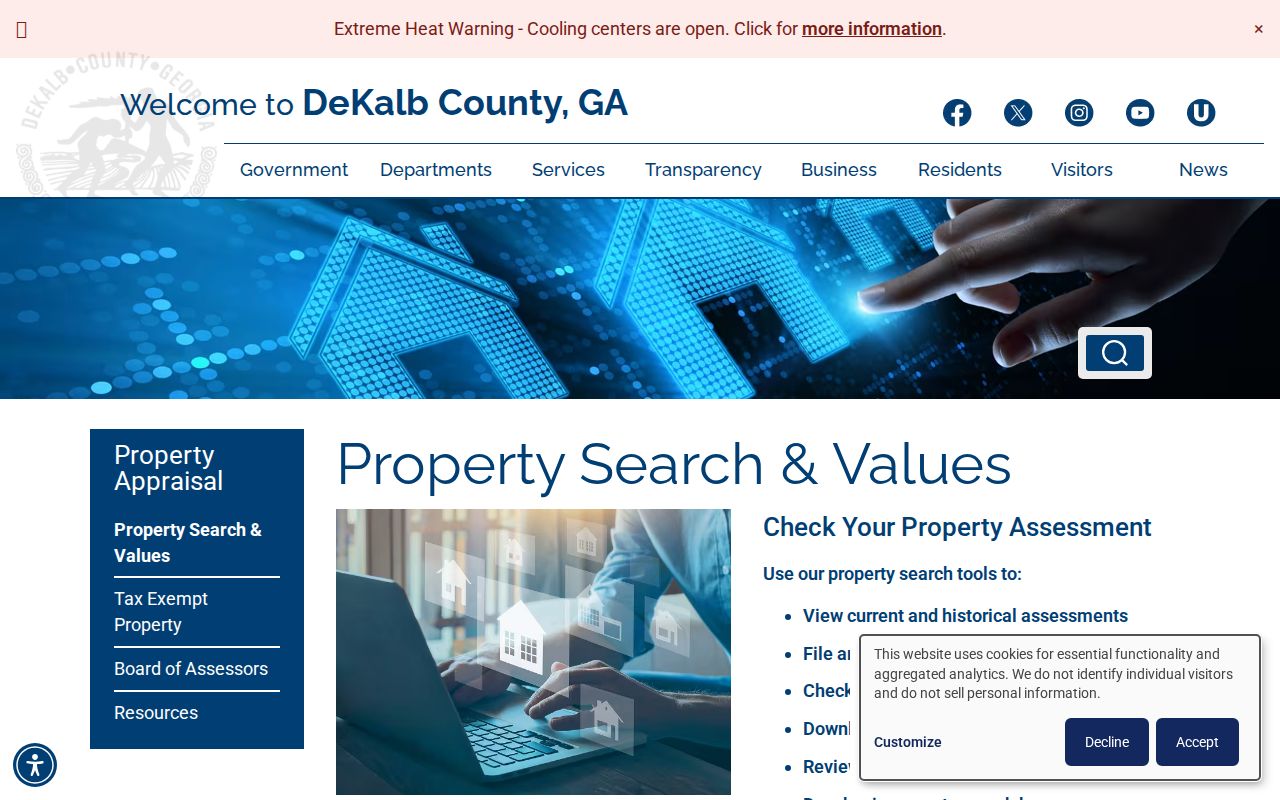
Use the parcel number and deed reference to move from a current assessment record into the recorded ownership chain. Assessment data is useful for identification, but it is not a survey and does not prove who lives at the address.
- Parcel
- The county database identifier for a piece of land.
- Situs address
- The parcel's physical location.
- Grantor
- The party transferring an interest in a deed.
- Grantee
- The party receiving that interest.
Follow Tucker Deed References
DeKalb GIS can bridge an address to the recorded instrument. Send the Mapping Team an address or parcel ID when a deed or plat reference is hard to locate. Staff can identify the latest book and page, but GIS does not supply the recorded image. The DeKalb Clerk's Real Estate Division is the image and copy custodian.
The DeKalb Landmark index provides the main electronic search for 1979 to the present. Its search routes include name, document, book and page, parcel ID, record date range, instrument number, and legal description. The historical alpha books cover April 1961 through 1977. Earlier material requires help from the clerk or archives.
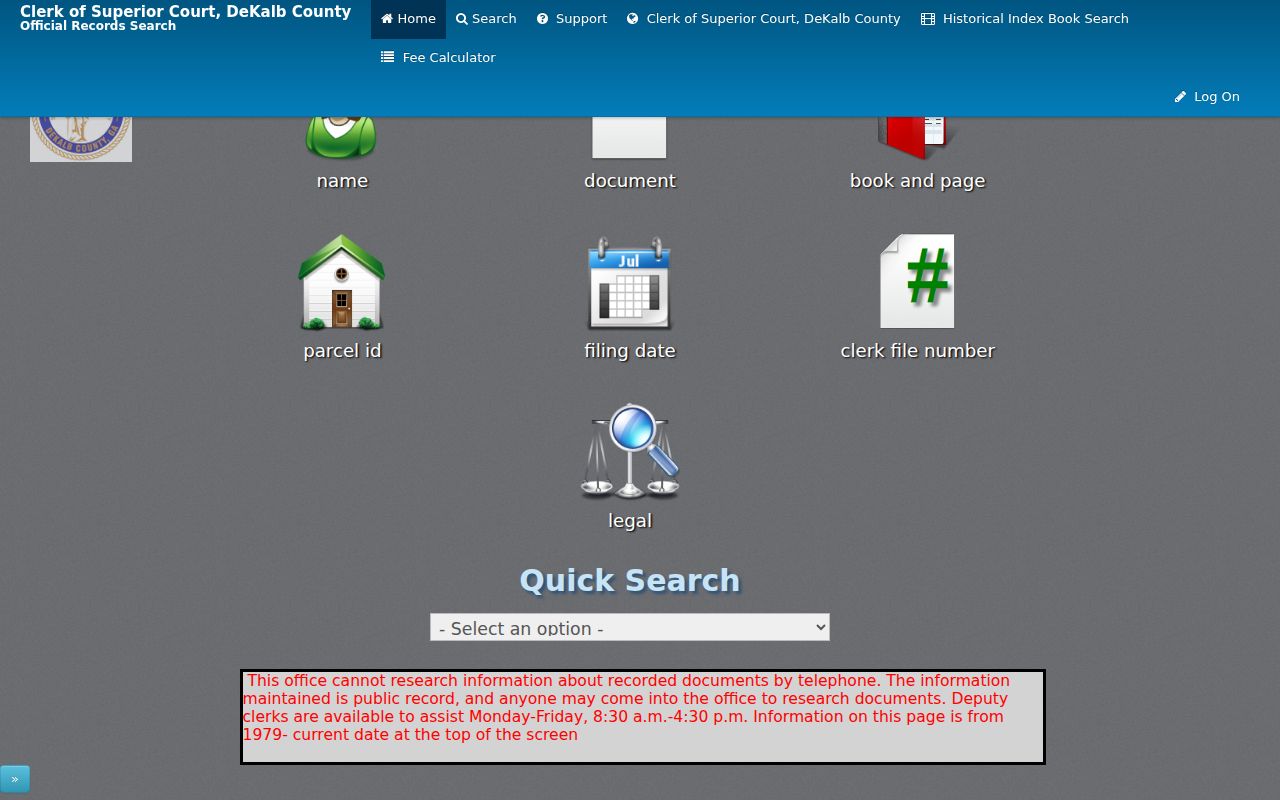
A result is an index pointer. Record the party role, instrument type, date, and book/page before ordering or opening an image. Repeat the process with the grantor to trace an earlier owner.
Landmark's historical alpha books are arranged by grantor and grantee, commonly split into A-K and L-Z volumes. The 1971 run has a short August through December volume, while later books use calendar years. Spelling variants matter. If the chain reaches before April 1961, ask the Real Estate Division or Georgia Archives where the relevant index and instrument can be inspected rather than assuming the online series is complete.
| Search route | Best known fact | Useful result |
|---|---|---|
| Name | Grantor or grantee | Instrument and recording reference |
| Book and page | Exact deed citation | Specific indexed instrument |
| Parcel ID | County land key | Related indexed land record |
| Date range | Likely transfer period | Narrowed party results |
Search Tucker Court Records
Court level matters. Tucker Municipal Court handles city-limit ordinance violations, traffic citations, and misdemeanor matters, while jury demands transfer to DeKalb State Court. DeKalb State, Superior, and Probate courts hold other county cases. The statewide re:SearchGA court search lets users search participating courts by party name and refine results by county, court, case type, status, filing date, and party type.
The official interface captured below shows the statewide search entry point.
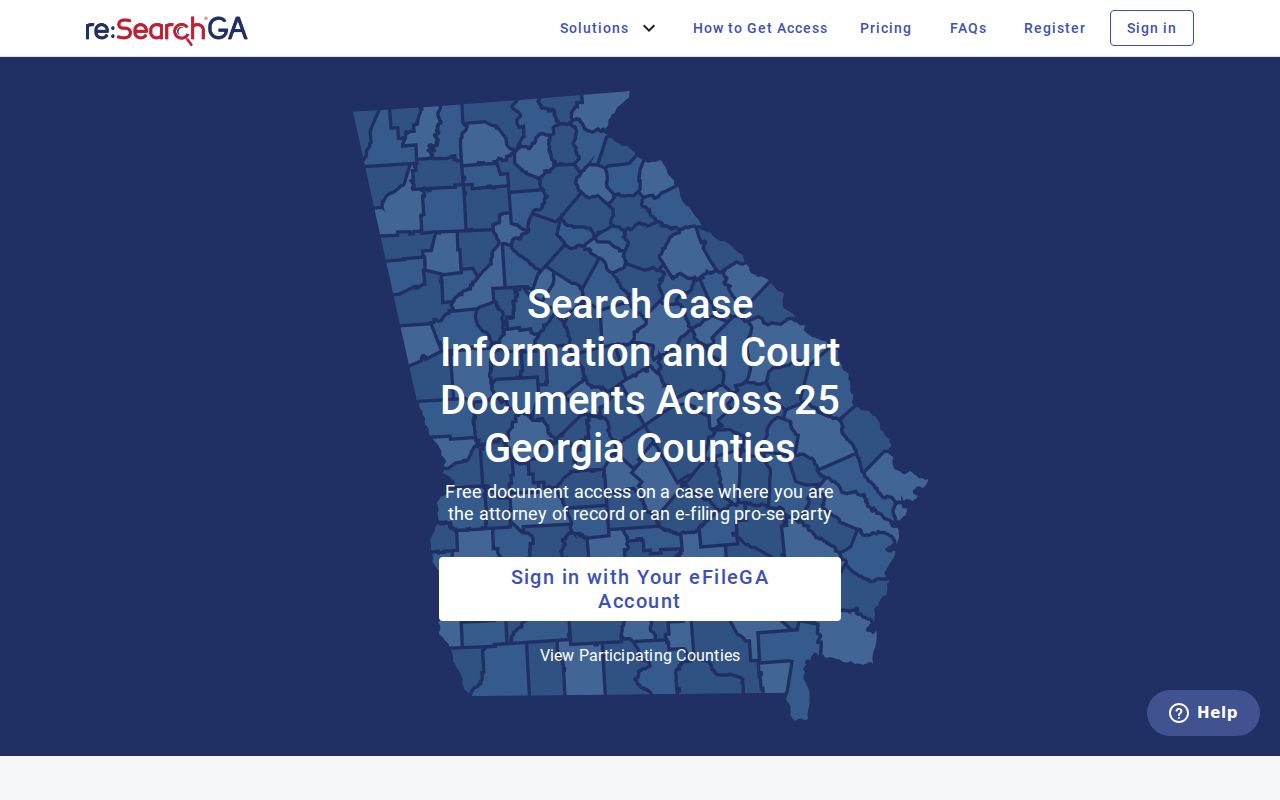
A docket is the case event list, not the full file. Results may show a case number, caption, court, type, status, filed date, parties, attorneys, charges or claims, and scheduled events. Document access varies. Sealed, restricted, and some sensitive matters will not appear as ordinary public results, so ask the responsible clerk about lawful access.
| Court | Covers | Name Search | Access |
|---|---|---|---|
| DeKalb State and Superior | Civil and criminal matters | re:SearchGA | Online search; clerk for files |
| Tucker Municipal Court | Ordinance, traffic, misdemeanors | No full public name index documented | Observe court or request closed files |
| Northern District of Georgia | Federal cases in DeKalb | PACER | Account and document charges may apply |
Trace Tucker Vital Records
Georgia vital records have separate custody and eligibility rules. The DeKalb Board of Health and Georgia Department of Public Health handle eligible birth and death certificate requests. The state holds marriage records for 1952 through 1996, while DeKalb Probate Court is the route for other Tucker-area marriage licenses. DPH can confirm divorces, but the DeKalb Superior Court clerk supplies the decree or case file.
Birth and death certified copies are restricted to eligible requesters under Georgia law. Adoption records are sealed, though Andee's Law now provides a route for an adult Georgia-born adoptee to request an uncertified original pre-adoption birth certificate. Marriage certificates are generally public. Historic death, marriage, divorce, cemetery, newspaper, and census indexes can supply genealogical facts without implying that every modern certificate is open.
The Georgia vital-records page identifies the proper order channel and record keeper.
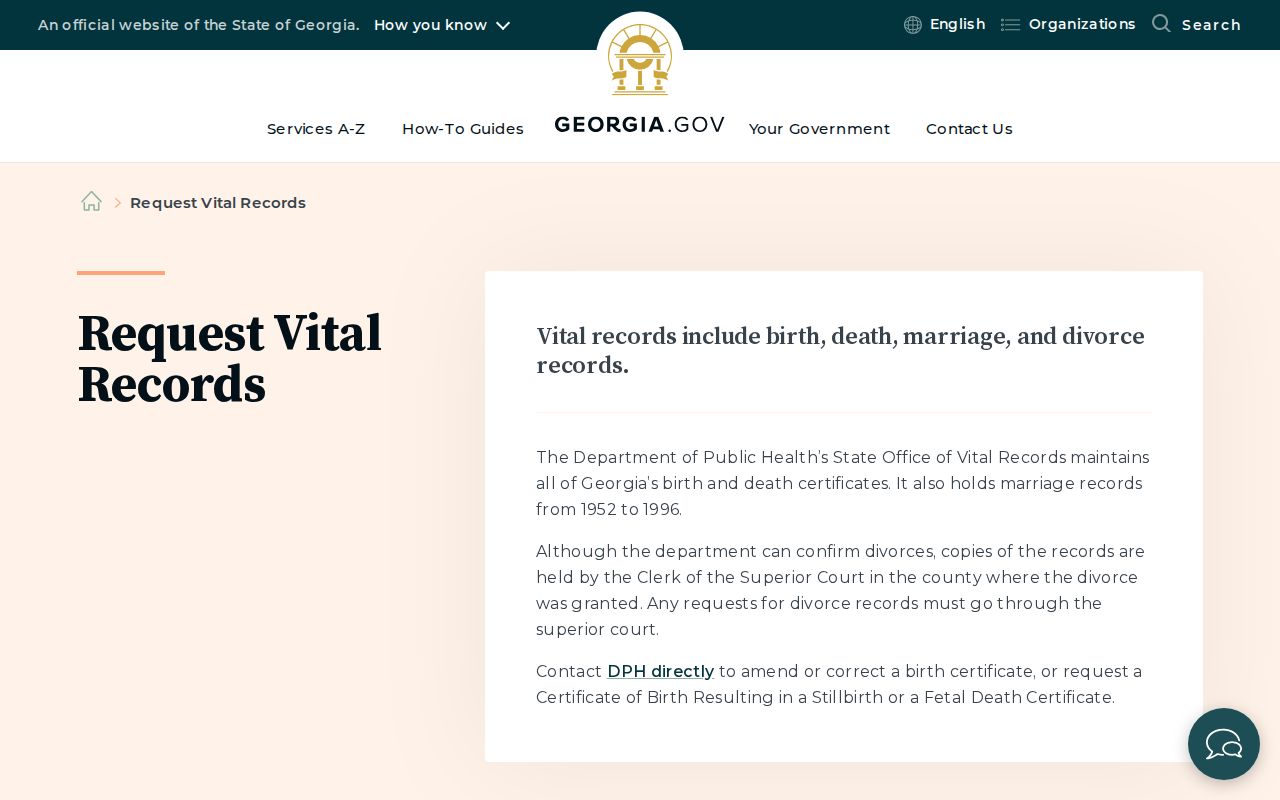
Check the requested record type, date, relationship, identification requirement, and custodian before paying for a copy.
Search Tucker Before 2016
Tucker voters created the city in 2015, and municipal operations began in 2016. Older permits, local court matters, and licenses therefore cannot be assumed to exist as a Tucker city series. Search DeKalb County government records, historic community names, Atlanta-area directories, and county court or land indexes. Modern city files and older county files form two parts of the same local trail.
The DeKalb County Public Library local-history collection keeps directories dating to 1928, census microfilm from 1820 through 1920, a cemetery index covering 1837 through 1979, and death, marriage, and divorce resources. The DeKalb History Center adds a 1939 DeKalb directory, five Tucker and Stone Mountain volumes, biographical files, photographs, oral histories, and neighborhood publications. Search names with addresses, relatives, organizations, and variant spellings.
Neighborhood papers can fill years that printed directories miss. Tucker Days, Tucker Times, Up Close & Personal in Tucker, and Smoke Signals contain names tied to civic events, businesses, clubs, and obituaries. The Georgia Historic Newspapers collection spans 1828 through 1993 at the collection level and supports full-text, date, title, region, city, and newspaper-type filters. Verify coverage for the particular title and year.
The Georgia Archives extends the search to state and county collections.
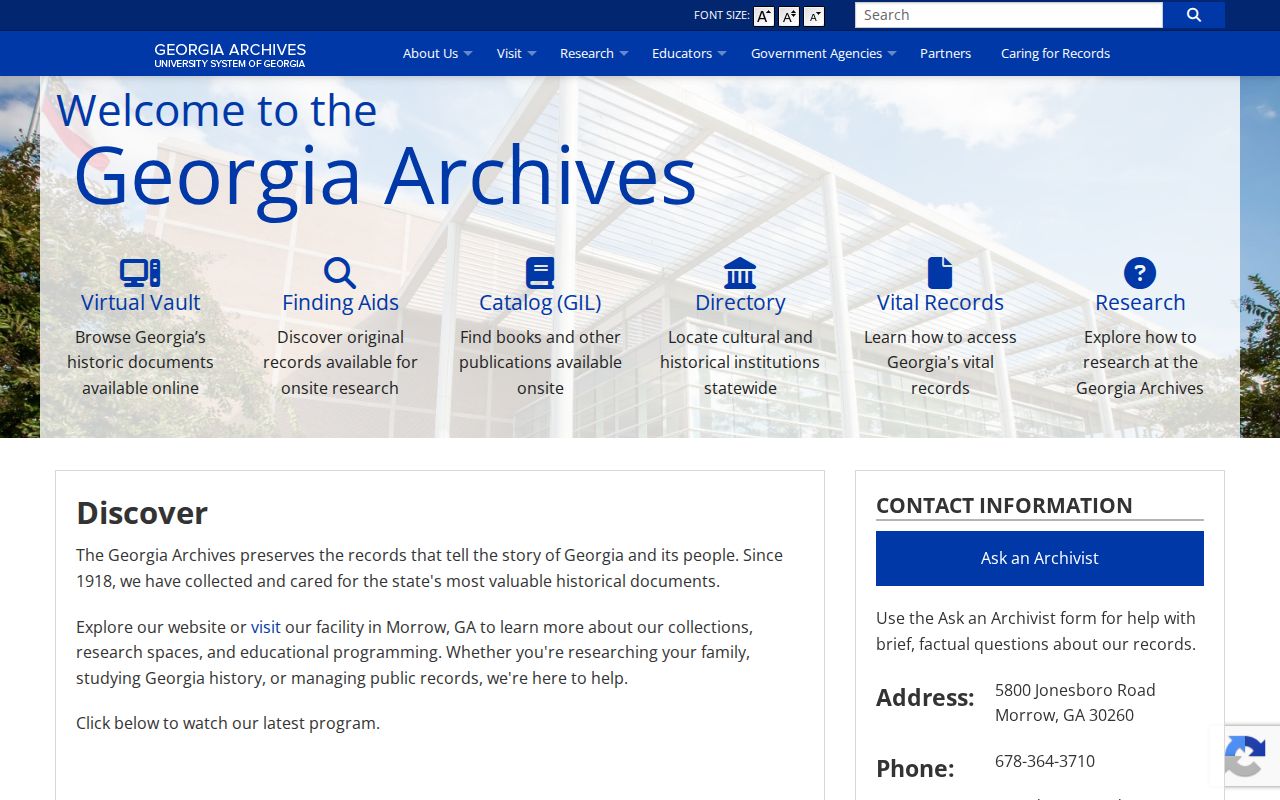
Catalog records and finding aids identify collections; some records still require a research-room visit or a request for staff help.
Find Tucker Names in Claims
Georgia's official unclaimed-property database can connect a person or business name with a reported last address and the organization that transferred the property to the state. It is useful when a family is tracing an estate, checking an old business name, or looking for property held for an heir. Search the name directly in the state system before responding to an unsolicited finder.
The Georgia unclaimed-property search is the official starting point.
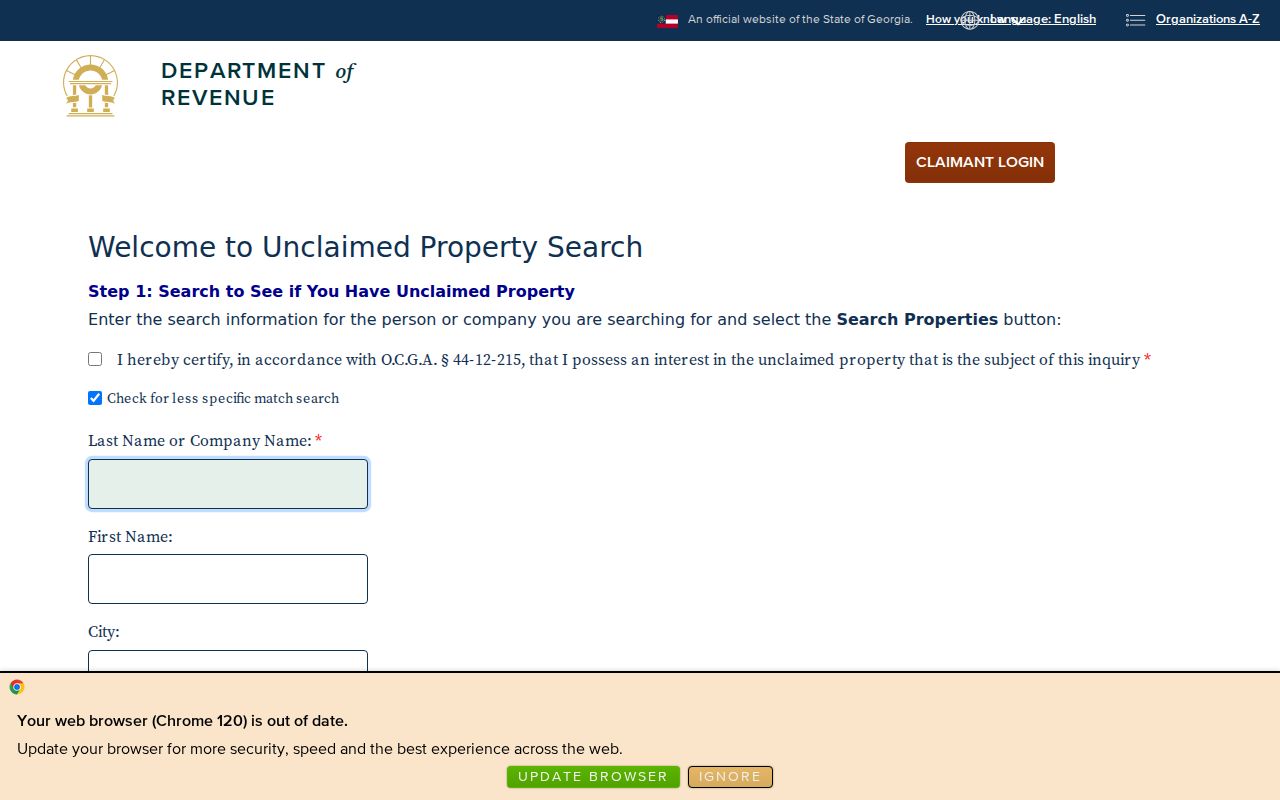
A similar name is not enough. Compare the city, address, middle initial, reporting organization, and family knowledge before beginning a claim. The state process, rather than a commercial solicitation, determines the proof needed.
Unclaimed property is also a timestamp. It can preserve a former address or organization link after a person moved, but it does not establish current residence. For an estate, save the displayed property details and follow the official claim instructions for the representative or heir. Do not pay an unsolicited finder before checking the same name in the state-held record.
Verify Tucker Business Roles
A business name can open a useful people trail along Tucker's commercial corridors. The Georgia Corporations Division search accepts a business name, control number, registered agent name, officer name, or designated agent name. Results can identify the entity's status and type, formation details, principal office, registered agent, and officers reported in annual registrations. These are roles and addresses of record. They do not prove that a person owns the premises or remains at that address today.
Tucker occupational-tax applications add local detail for businesses inside city jurisdiction. The city's current packet asks for the legal and trade name, DBA registration, parcel, business location, mailing address, owner, on-site contact, website, and proposed use. No public citywide register was documented, so request a specific existing certificate or application from the City Clerk. Describe the business, likely date range, address, and record type rather than asking staff to create a new compilation.
The Georgia professional-license search provides another primary-source check. Search fields include profession, license number, first and last name, business name, location, and status. Results commonly show the licensee, profession, number, status, issue and expiration dates, and public board orders where available. Separate systems cover physicians, lawyers, real-estate professionals, and educators, so one empty result is not conclusive.
Request Offline Tucker Records
Not every useful Tucker record has a public name index. Permit jackets, code files, occupational-tax applications, contracts, and closed municipal-court documents may require a focused request. Georgia's Open Records Act requires a response within three business days. When records cannot be produced in that period, the custodian should identify the responsive material, a production timetable, estimated cost, and any legal basis for withholding.
Use the Tucker open-records portal for city-held files. Give the department, record type, names or address, and a practical date range. Attach a notice or case reference if it helps identify the record. The city is not required to create a report that does not exist, and lawful search, redaction, production, and copy charges may apply. A precise request can reduce both delay and cost.
- Confirm that Tucker, not DeKalb or Georgia, is the custodian.
- Name the existing record and the office likely to hold it.
- Supply dates, addresses, case numbers, or document references.
- Ask for electronic inspection or copies when available.
- Keep the response, estimate, invoice, and cited exemption together.
For county deeds, court files, elections, jail records, or older government material, contact the matching DeKalb office instead. Statewide vital, license, business, archive, and offender records belong with their Georgia custodians. Sending the same broad request to every office rarely speeds the search.
Connect Tucker Family Records
A deceased person may appear across several sources that describe different parts of the same life. A deed can establish ownership and a recording date. Probate filings may name an estate representative. Obituary and newspaper indexes can supply relatives, organizations, and burial details. Death and cemetery indexes add dates and places. None should be forced to prove more than it states.
The Decatur Library's local-history collection is especially useful for Tucker families. Its city directories date to 1928, cemetery index spans 1837 through 1979, and death index covers 1919 through 1999. DeKalb News Era and Atlanta newspaper holdings can reveal funeral notices and community ties. Georgia census microfilm, Sanborn maps, HeritageHub, and the Digital Library of Georgia extend the trail. Coverage varies by title and year, so check the collection before assuming a gap means no record exists.
Small cemetery inventories can anchor a family name to a land lot and district when street names changed. DeKalb History Center material identifies Tucker-area sites such as Cochran Family Cemetery, Dabney-Shumate Cemetery, and Gresham Family Cemetery. These descriptions are research aids, not permission to enter private land. Compare the land-lot reference with deeds, plats, and current parcel maps.
Separate Tucker Same-Name Results
Tucker and DeKalb searches can return many people with similar names. Preserve punctuation, compound surnames, transliteration variants, and alternate name order. Try partial surname searches only when the portal supports them, then narrow by address, date, parcel, instrument role, school, agency, or court. Never infer identity from surname frequency alone.
Official records and commercial compilations serve different roles. Official indexes identify the responsible custodian, record type, date, and source identifier. Commercial results may merge stale addresses or unrelated people and should not replace a deed, docket, license result, or archival citation. Even official data can lag, so read what the record actually proves.
| Source | Strong point | Main limit |
|---|---|---|
| Parcel roll | Owner and land identifiers | Not an occupant list |
| Deed index | Recorded parties and dates | Not proof of current residence |
| Court docket | Case parties and events | Not always the full file |
| Historic directory | Dated name and address snapshot | May omit household members |
Two independent facts make a safer match. Keep the source date and exact displayed role with every result, especially when reconnecting with relatives, tracing heirs, or researching neighborhood history.
Dates resolve many conflicts. A directory publication year, deed recording date, case filing date, assessment year, and license expiration date describe different moments. Place them in order before combining identities. When two people share a name, retain both candidates until an address, relative, middle name, parcel, employer-free public role, or other lawful detail separates them. An uncertain result should remain uncertain.